
The stark reality of conventional insulation
We need to start with some basic physics by identifying the three types of heat movement which are:
Conduction and convection are methods in which heat flows. Conduction utilizes a solid to conduct heat while convective heat flow reacts to fluid dynamics and the differential buoyancy which causes hot air to rise and vice versa.
Radiation is a source of energy in an electromagnetic wavelength, much like light. Consider this: once radiation is stopped (absorbed), conduction and convection are created.
Webster's definitions:
Conductive Heat "To act as a conveyor, transmitter, or conductor, as of electricity, heat, etc.";
Conductive heat requires a solid entity to allow heated molecules to transfer heat. Conduction is fairly easy to limit by placing a non conductive or low mass separation in its path.
Convective Heat; "The transference of heat by the circulation of movement of the heated parts of a liquid or gas;"
Convective heat moves by the changing density of air or liquid. This creates a constant movement of heat as long as there is a temperature differential between the air or liquid and the source of heat. Convective heat movement is also fairly easy to restrict, just keep the medium (air or water) from moving. Fibrous insulation works well to limit convection.
Now let's take a look at the not so obvious:
Radiant Heat; "In Physics, (a) the transmission of electromagnetic energy through space in straight lines; opposed to conduction and convection; (b) energy in process of transference through space; used especially of light and infrared heat."
When radiant heat is viewed as a form of energy, a wave length, rather than a type of heat movement, it becomes easier to understand how it behaves with fibrous insulation products. When radiant heat can be reduced from entering a home, conductive and convective heat (which increases power usage), also decreases proportionately. Therefore, if you can reduce the amount radiant energy, you reduce convective and conductive heat loads which increases comfort and significantly reduces the need for energy.
Reducing infrared heat can be accomplished by placing one or more highly reflective surfaces between the space being heated or cooled (your house), and the source (the sun or your ceiling during the winter). Keep this in mind: Heat always moves from a higher temperature to a lower temperature.
Without protection from radiant heat, insulation traps, stores, then releases heat for hours consuming energy, reducing comfort, costing you energy dollars.
RESIST HEAT OR CHANGE THE DIRECTION?
Now let's look at what fiberglass does. If you live in Chicago, Minnesota, Detroit or any cold winter climate, what do you when you are cold? Put a sweater on. Sweaters have an "R" factor or resistance to heat loss. Come August, will you be pulling weeds in the hot sun with a sweater on? The sweater resists heat flow right? Obviously this sounds crazy so why then do we put so much credence into the same scenario in ceilings and walls of our homes? Why then are we building homes in hot climates with sweaters in the walls and ceilings? Because building codes, most of which orginated in cold climates, are designed for buildings in cold climates. We don't need insulation in a hot sunny climate, we need "outsulation" to mitigate the heat before it enters our walls and roofs.
RADIANT BARRIER
A radiant barrier is a highly reflective surface that easily changes the direction of infrared heat instead of having it absorbed into your insulation.
Why slow heat down in your home or office when you can change the direction with a low cost, proven, high performance Radiant Barrier? The performance is unmatched and comfort and savings are immediate. For a brochure and sample click here.
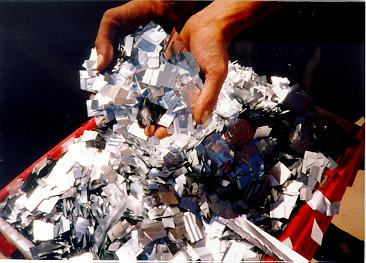 RBS Chips for the attic
RBS Chips have been time tested, proven and patented energy product which is now available in a simple, cost effective do it yourself method. Simply blow them in over your existing insulation and start saving.
We can ship you the hose and light weight installation machine. Just ship it back when you are done. We now have installations all over the country. Email us for more details.
If your new home is in the planning stage, we can offer suggestions to build energy efficiency into your new home. If your home is the framing stage, you still have time to install the most efficient product in the walls and attic. Call today for a free estimate.
Contact us at: 602-867-3176 for ordering product or application questions.
Back to Top
Click here to contact us
Back to main page
All our products come with complete instructions, application suggestions and a no gimmick, money-back warranty. No order too big or too small!
Web page design and maintained by B Rad Design Group
Copyright 2004 Horizon Energy Systems. All rights reserved.
Information in this document is subject to change without notice.
Other products and companies referred to herein are trademarks or registered
trademarks of their respective companies or mark holders.
